Adding MRR or LTV to posts
How to get there: Click All Posts in the sidebar → open a post → the MRR/LTV values are shown in the post details panel based on voter data.
Maximizing Feature Prioritization with MRR and Lifetime Value
Prioritizing features effectively is crucial to enhancing productivity and customer satisfaction. One powerful method to prioritize features is by incorporating Monthly Recurring Revenue (MRR) or Lifetime Value (LTV) into your decision-making process. This guide will walk you through how to use these metrics to identify which features provide the most value to your clients.
Why Use MRR and LTV for Feature Prioritization?
Understanding the financial impact of each feature request allows you to make informed decisions. By focusing on features that contribute significantly to your MRR or LTV, you ensure that your efforts align with business goals and customer value.
Key Benefits:
-
Informed Decision-Making: Focus on features that maximize revenue.
-
Resource Optimization: Allocate resources to features with the highest return.
-
Customer Satisfaction: Prioritize features that matter most to high-value clients.
Step-by-Step Guide
Step 1: Gather Client MRR and LTV Data
Before you can prioritize features based on MRR or LTV, you need accurate data.
Instructions:
-
Upload via CSV: Prepare a CSV file with columns for email and MRR/LTV. Upload it to ProductLift to overwrite existing data at Users > File import.
-
API Update: Use the ProductLift API to push updates programmatically. Refer to the ProductLift API documentation for detailed guidance.
-
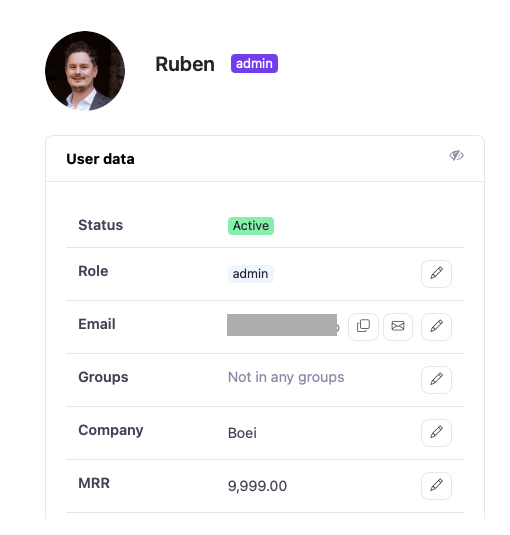
Manual Entry: Navigate to a user's profile within ProductLift and edit the MRR or LTV fields directly.
Step 3: Analyze Feature Requests
Now that your data is updated, analyze feature requests to see which have the highest associated MRR or LTV.
How to Analyze:
-
Feature Voting Overview: Access the feature voting page to see a breakdown of requests and their total MRR/LTV.
-
MRR Calculation: ProductLift automatically calculates the total MRR for each feature based on user votes. For example, if 10 users with an MRR of $10 each vote for a feature, the total MRR is $100.
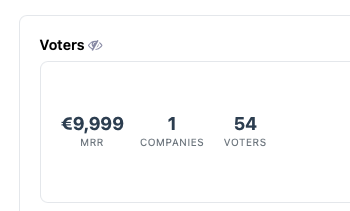
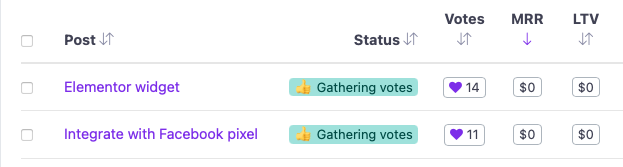
Step 4: See the MRR on your All posts page.
You can see the total MRR of the posts on your "All posts" page so this helps identify the best features to build. Note that the total MRR on the all posts page has a time delay compared to individual posts.
With your analysis complete, prioritize features that align with your business goals.
Tips for Prioritization:
-
Focus on High MRR Features: Prioritize features that contribute significantly to your top clients' satisfaction.
-
Balance Short and Long-Term Goals: Consider both immediate MRR gains and long-term LTV growth.
-
Communicate with Stakeholders: Use data-driven insights to justify prioritization decisions to stakeholders.
Step 5: Monitor and Adjust
Feature prioritization is an ongoing process. Regularly review and adjust based on new data and changing business objectives.
Monitoring Tips:
-
Regular Updates: Continuously update MRR and LTV data to reflect changes in client value.
-
Feedback Loop: Gather feedback from clients to ensure prioritized features meet their needs.
-
Iterative Process: Reassess priorities as new feature requests and client data emerge.
Practical Example
Imagine you have two clients: Client A contributes $500 MRR and Client B contributes $50 MRR. Both have requested different features. By focusing on the feature requested by Client A, you could maximize your revenue impact, asuming it aligns with business goals and your product vision.
Conclusion
Incorporating MRR and LTV into your feature prioritization process empowers you to make strategic, data-driven decisions. By following this guide, you can ensure that your efforts are focused on features that deliver the most value to both your clients and your business. Regular monitoring and updates will keep your prioritization strategy aligned with evolving client needs and business objectives.